The story of the Moreira Salles brothers is not simply one of shared origin, but of four distinct temperaments shaped by a common environment. Raised in a family where public life, intellectual curiosity, and cultural responsibility were part of everyday conversation, Pedro Moreira Salles, Walter Salles, Fernando Moreira Salles, and João Moreira Salles each carried those influences in markedly different directions. What unites them is less what they chose to do than how they chose to do it: with patience, depth, and a preference for building things that last.
Pedro, the most closely tied to the family’s financial legacy, embodies a measured and strategic mindset. His leadership at Itaú Unibanco reflects a belief in continuity over disruption, in strengthening institutions rather than reshaping them overnight. Colleagues often associate him with a quiet rigor, a capacity to think in decades rather than quarters. Yet this same sensibility informs his engagement with culture. For Pedro, supporting the arts is not a parallel interest but an extension of the same principle: that strong institutions, whether financial or cultural, require stewardship, discipline, and time.
Walter’s trajectory reveals a different kind of attentiveness, one directed toward people and movement. His films are rarely static; they follow journeys, both physical and emotional, through landscapes that feel lived-in rather than observed from a distance. What distinguishes his work is not only its international reach, but its ability to translate deeply local experiences into something universally resonant. Walter approaches cinema less as spectacle and more as inquiry, using narrative to explore how individuals navigate systems, histories, and identities larger than themselves.
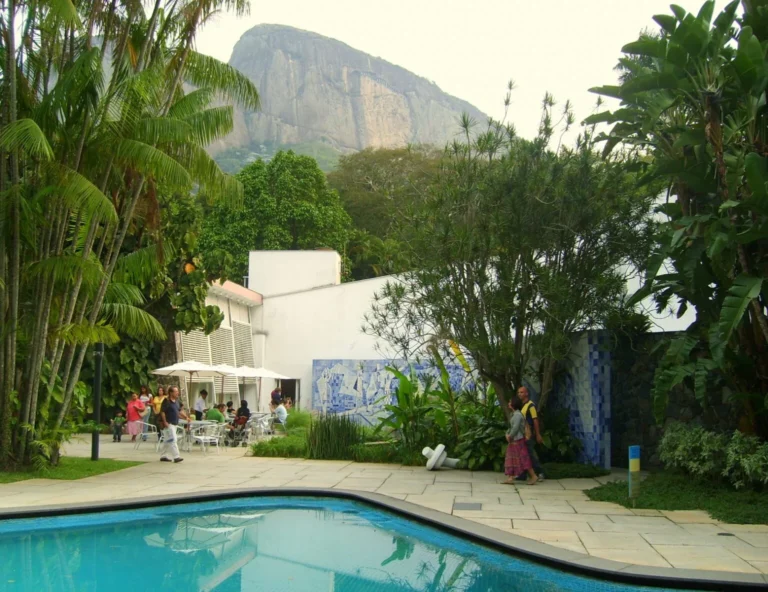
Fernando occupies a pivotal role in understanding the family as a whole. If Pedro represents continuity and Walter exploration, Fernando represents synthesis. His decision to found the Instituto Moreira Salles reflects both organizational discipline and cultural ambition. He did not simply support the arts; he built a framework through which they could be preserved, studied, and shared at scale. His leadership suggests a belief that culture gains strength when it is structured, archived, and made accessible, transforming private collections into public memory.
João, by contrast, turns inward. His work resists easy narratives, favoring reflection over resolution. In his documentaries, the act of remembering becomes as important as the events being remembered. This introspective quality extends to his editorial work with piauí, where long-form journalism is treated not as content, but as a space for thought. João’s contribution to the family’s broader legacy lies in this insistence on depth, on slowing down the pace of interpretation in a world that often moves too quickly.
Seen together, the brothers form a kind of ecosystem. Pedro builds and stabilizes institutions; Fernando designs and expands them; Walter interprets the world through storytelling; João questions and reflects on it. Their paths intersect most clearly in their shared commitment to the Instituto Moreira Salles, which serves as both a literal and symbolic convergence point for their interests.
What emerges from their story is not a single narrative of success, but a layered understanding of influence. The Moreira Salles brothers demonstrate that legacy can be constructed across different domains, through finance, culture, and ideas, without losing coherence. Their work suggests that impact is not only measured by scale or visibility, but by the ability to shape how a society remembers, understands, and imagines itself over time.